43 major record labels of the 1950s
THE COVER VERSION PHENOMENON IN THE 1950s.docx - Course Hero 2 creation of the cover version phenomenon in the 1950s. Cover version was a practice adopted by major record labels in America, to re-record and produce songs that were originally authored by African American artists. The re-creation of African American songs was majorly done white artists, whose intention was to boost commercial sales of the cover songs to a broader audience, which in this ... Music Industry History 1980s - Playlist Research - Matador Records is founded in 1989 by Chris Lombardi, who operates out of his New York apartment. It becomes a label dedicated to unique alternative acts. Half of the company will be purchased by Beggars Banquet in 2002. - By the end of the eighties the top major labels were Sony, Warner, PolyGram, BMG, EMI and MCA.
Those old record labels - Tom's Guide Forum Those aren't really *old* record labels; they're middle-aged, dating from the 1950s and 1960s, and many of them are still active, although owned by conglomerates now. You want some *old* record labels? Berliner Paramount Challenge Supertone OKeh Odeon Silvertone Little Wonder (also the name of a banjo) Conqueror Harvard Oxford QRS Grey Gull ...

Major record labels of the 1950s
Independent Record Labels | History | Play Alone Records Established in the 1950s in Memphis, Tennessee, Sun Records signed artists considered to be out of the mainstream. It's funny- to think of country and rock music as "unconventional" styles. They were, however, and were able to get their footing because of the indie philosophy. For the indie scene, a niche was the gateway to success. Music Industry History 1950s - Playlist Research - In the early 1950s the big five major record labels were Columbia, RCA Victor, Decca, Capitol and Mercury. Capitol had risen to being the fourth biggest label in 1955 when EMI, the biggest UK record operation, bought Capitol for $8.5 million. the market share for major labels fell dramatically. History of R&R CH 2 Flashcards | Quizlet The emergence of rock and roll in the 1950s can be attributed to the relationship between DJs and indie record labels. All of the following are elements of Chuck Berry's music EXCEPT songs geared toward adult black listeners. Which of the following was a trademark of Little Richard's music? maniacal singing Elvis's first single for RCA was
Major record labels of the 1950s. The 10 Largest Record Labels In The United States - Zippia Their holdings in the United States are some of the best-known record labels from the past and include: Capitol Music Group Def Jam Recordings Fame House Interscope Geffen AM Island Records Polygram Entertainment Republic Records Spinefarm Records Universal Music Enterprises Universal Music Group Nashville Universal Music Latin Entertainment History of Rock and Roll unit 2 Flashcards | Quizlet 4 small, independent record labels/ 3 major record labels 1. Chess, Vee Jay, Imperial, and Atlantic/ Columbia, RCA, Victor Why wouldn't the major record labels produce African American Music in the 1950s? They were afraid of losing business if they recorded colored people. What was the 1950s "cover" phenomenon? The Independent Labels - University of Idaho significant to rock music. Some of the most important labels were Atlantic, Chess, Elektra, Imperial, King, Specialty, and Sun Records, followed later in the 1950s by Stax and Motown. Atlantic Records was established in 1947 by Ahmet Ertegun and Herb Abramson and focused on recording black rhythm and blues artists. Among the early The Independent Record Labels of the 1950's and 1960's Chess Records flourished in those early days of both Rhythm and Blues and independent record companies…Chess, along with Atlantic, Aladdin, Specialty, Imperial, Modern and King were giving the References: Jacobs, Pat. "Independent Record Labels of the 50's and 60's".
Top 10 major Record Labels - Medium The American record label has signed some of the world's top earning artists such as James Blunt, David Guetta, Bruno Mars, Kelly Clarkson, Wiz Khalifa, Charlie Puth, Skrillex, Marina and the... 1950s Rock and Roll: A Decade of Music That Changed the World - Rolling ... The most durable (read "overused") bass riff in Fifties rock & roll, as exemplified by Fats Domino's "Blue Monday" or Lloyd Price's and Elvis Presley's "Lawdy Miss Clawdy," had been pinched by Dave... The Independent Record Labels of the 1950's and 1960's Order custom essay The Independent Record Labels of the 1950's and 1960's with free plagiarism report GET ORIGINAL PAPER They found a signature sound in the electric guitar of Muddy Waters. Besides Muddy Watters, their rostser included Chuck Berry, Bo Diddley, Willie Nixon, Etta James, Little Walter, Billie Stewart, and Howlin' Wolf. An ISP Settled Piracy Lawsuits. Could Users Take the Hit? A jury ruled in December 2019 that Cox must pay $1 billion in damages to the major record labels in a case filed in US District Court for the Eastern District of Virginia.
The Major Record Companies - The History of Rock and Roll The most important were New York's Atlantic Records, Chicago's Chess Records, Cincinnati's King Records, Los Angeles Specialty Records and Memphis' Sun Records. It wouldn't be until the mid-fifties that the Majors would discover the error of their ways. Founding, Subsidaries, Executives, Artists, etc ASCAP and BMI Record Labels 1959 - Deacon Street In the decade of the 1950's the landscape of the record industry had changed dramatically. By 1959 the major record labels had seen their share of the Billboard chart drop to 23%. But at the same time, record sales had boomed, climbing from 189 million in 1950 to 603 million in 1959. Sales had increased a modest 90 million from 1950 to 1955 ... 50sPopMusic.com Rhythm & blues recordings and country & western songs did not enter into mainstream popular music until the mid-fifties, and the timing coincided with the birth of rock 'n' roll. 'Pop' music records were usually released by one of the six major labels: Capitol, Columbia, Decca, MGM, Mercury, and RCA Victor. Legendary Albums of the 1950s Quiz - Iconic Historical Photos In the post-war economic boom of the 1950s, the vast spread of wealth brought innovation to a vast array of elements of American and European life. ... Major record labels and recording artists emerged during this period to set the pace for music's evolution throughout the next century. The central style of the 50s definitely showed influence ...

Decca Records | American company | Britannica.com
How the Big Four Record Labels Became the Big Three The Big Three record labels are: Sony BMG Universal Music Group Warner Music Group These labels can make up almost 80% of the music market or even more—depending on the year—although it was estimated to be about two-thirds in 2016. How Artists Are Affected

When 45 RPM vinyl singles & their record players debuted, it was a big deal - Click Americana
The Independent Record Companies - History of Rock Sun Records played an important part in the development of rock 'n' roll and country music, working with artists such as Elvis Presley, Carl Perkins, Johnny Cash, Jerry Lee Lewis, Roy Orbison, and Charlie Rich. These independent labels usually aimed their releases at a small but loyal audience.

216 best Record Labels 1970's images on Pinterest | 80s music, 1970s and Glam rock
What happened to radio DJs?: Payola, rock and roll, and race in the 1950s Coase notes that the four major record companies in the late 1940s and early 1950s had 78% of records on Billboard's top ten Hit Parade. By 1959, right before the anti-payola legislation passed, those labels' share of hit records had fallen to 34%.
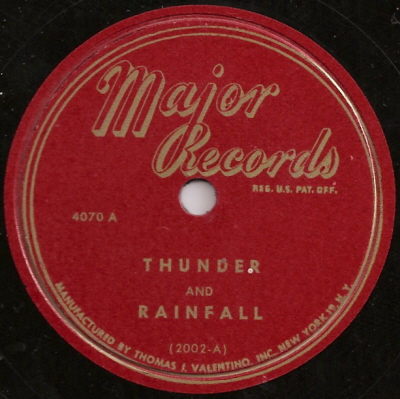
78 rpm Record Labels
The Rise and Fall of Record Labels - Claremont Colleges 1950s when it became cost effective to do so. The 1950s saw Decca Records, RCA, and Columbia all become major players in the recorded music industry 9. Many more record labels entered the scene in the 1950s but eventually the record labels began to merge and consolidate to form a few corporate giants.

78 rpm Record Labels
Category:Record labels established in 1950 - Wikipedia Pages in category "Record labels established in 1950" The following 22 pages are in this category, out of 22 total. This list may not reflect recent changes . A. Acorn Records; C. Capitol Records Nashville; Chess Records; Codiscos; D. Dot Records; E. Elektra Records; F. Federal Records; M. Music Minus One; N.

The Real Billie Holiday, Part Three – 1950s - Dagogo
Record Labels 1960 - Deacon Street Cub records rounded out the top ten labels of 1960 with two successful Jimmy Jones' records: "Good Timin'" (#3) and "Handy Man" (#2). (Cub was a subsidiary of MGM which was established to handle the company's "rhythm and blues" releases.) Many small labels continued to catch lightning in a bottle in 1960. Herald ("Stay" by Maurice Williams ...

CVINYL.COM - Label Variations: Philips Records
Independent record label - Wikipedia In the United Kingdom during the 1950s and 1960s, the major labels EMI, Philips, and Decca had so much power that smaller labels struggled to establish themselves. Several British producers launched independent labels, including Joe Meek ( Triumph Records ), Andrew Oldham ( Immediate Records ), and Larry Page ( Page One Records ). [5]

Retro 45 RPM Record Stock Images - Image: 2687864
Major Labels vs Independent Labels | Differences Between Major and ... Major record labels are naturally going to offer bigger advances than smaller indie operations, but the size of advance will differ dramatically depending on the size and affiliation of the particular label. Rather than offering an advance, indies often agree to cover a portion of the recording costs but this production loan is still recouped ...

122 best Vintage Record Labels images on Pinterest | Vintage records, Vinyls and Vinyl records
Record labels that rocked our world - The Independent Blue Note's golden age was in the 1950s and 1960s, when it released records by the cream of US jazz musicians and composers: trumpeter Lee Morgan, pianist Sonny Clark and tenor sax player Dexter...

Roots Vinyl Guide
The Independent Record Labels of the 1950's and 1960's Originally, Independent music referred to bands or artists who performed and/or produced music autonomously and without the commercial rules and restrictions associated with major record labels (Hale, 2014). Throughout the years Independent music has evolved into a broader meaning (America Rocks, 2016). The 1950's.

34 1960s Records Label - Labels Design Ideas 2020
History of R&R CH 2 Flashcards | Quizlet The emergence of rock and roll in the 1950s can be attributed to the relationship between DJs and indie record labels. All of the following are elements of Chuck Berry's music EXCEPT songs geared toward adult black listeners. Which of the following was a trademark of Little Richard's music? maniacal singing Elvis's first single for RCA was

Major record labels gang up and screw over indie record store | Boing Boing
Music Industry History 1950s - Playlist Research - In the early 1950s the big five major record labels were Columbia, RCA Victor, Decca, Capitol and Mercury. Capitol had risen to being the fourth biggest label in 1955 when EMI, the biggest UK record operation, bought Capitol for $8.5 million. the market share for major labels fell dramatically.

WBSS Media-Alice Coltrane
Independent Record Labels | History | Play Alone Records Established in the 1950s in Memphis, Tennessee, Sun Records signed artists considered to be out of the mainstream. It's funny- to think of country and rock music as "unconventional" styles. They were, however, and were able to get their footing because of the indie philosophy. For the indie scene, a niche was the gateway to success.
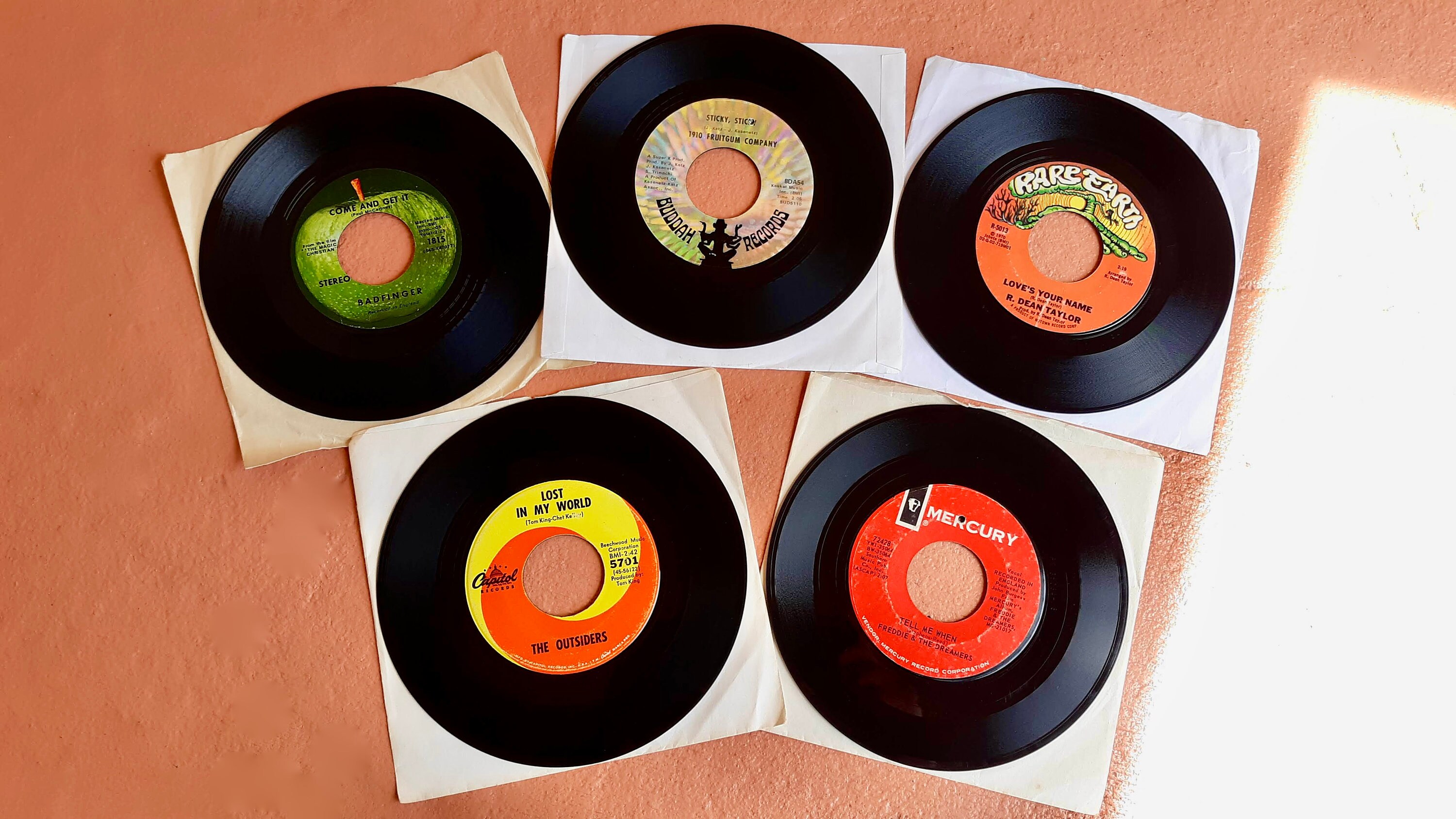
RARE Lot of 5 Vintage Records // 45 RPM // 1960s 1970s Rock | Etsy
Historic Music Library : 78RPM Label Gallery - Examples Of 78 RPM Record Labels We Dont Buy

30 1930s Record Label - Labels For Your Ideas

1000+ images about Vintage Record Labels on Pinterest | Vinyls, Rock roll and Turntable
Post a Comment for "43 major record labels of the 1950s"