38 country of origin meat labels
Origin labelling - Language selection | Food Safety (Article 26(2)(a)). In addition, the Regulation requires the origin labelling for fresh, chilled and frozen meat of swine, sheep, goats and poultry and ... Country of Origin Labeling: MCOOL bill officially introduced The 2002 M-COOL law passed in the 2002 Farm Bill and amended by the 2008 Farm Bill required country-of-origin labels on beef, lamb, pork, goat meat, chicken, fruits and vegetables, fish and shellfish, peanuts, ginseng, pecans, and macadamia nuts. After M-COOL's 2002 passage, implementation was delayed.
Country of Origin Labeling Country of origin information, through signs, labels, etc., is required regarding certain fresh meat products, e.g. steaks, ground beef, and pork chops, as well as certain fresh chicken products that are sold in retail stores. Meat and chicken products sold in restaurants, as well as processed products, are exempt from the law.

Country of origin meat labels
House Votes to Remove Country-of-Origin Labels on Meat Sold in U.S. House Votes to Remove Country-of-Origin Labels on Meat Sold in U.S. Washington seeks to prevent a long battle over the labels with Canada and Mexico Country-of-origin labels were mandated by... Did the U.S. Remove 'Country of Origin' Labeling from Meat? Dec 31, 2015 · The repeal would not affect existing requirements for country-of-origin labeling for lamb, venison, goat meat, perishable agricultural commodities, peanuts, farm-raised and wild fish, ginseng,... Country of Origin Labeling (COOL) Frequently Asked Questions The abbreviations "P.R. China" and "China" are acceptable for country of origin marking purposes for products originating from the People's Republic of China. Either "Netherlands" or "Holland" is an acceptable abbreviation for The Netherlands.
Country of origin meat labels. Do You Know Where Your Meat Comes From? - EcoWatch Harris, who estimates at least 75 percent of the grassfed beef consumed in America comes from Australia, New Zealand or Uruguay, said American consumers are being intentionally misled. Millions of pounds of beef, imported from other countries, are being wrongly labeled as "Product of the USA," Harris said. Meat Labeling Law Repeal Leaves Buyers in Dark About Product Origins After more than a decade of wrangling, Congress repealed a meat labeling law last month that required retailers to include the animal's country of origin on packages of pork and beef. It's a major... Food labelling: country of origin - GOV.UK If poultry, sheep, goat or swine meat is taken from animals born, reared and slaughtered in the same country, you can label it as 'Origin: [name of the country]'. Where reference is made to the... Country of Origin: What's in a Label? - The Beef Site Some packers may opt to label their meat as products of the U.S., Canada and Mexico, rather than attempt to claim an exclusively U.S. origin for only part of their production. Farm groups have criticized that strategy, saying it would defeat the purpose of labelling .
Country of Origin Labeling for Meat Back on the Menu The White House and Congress are both taking steps toward revising rules on “made in USA” labels for meat, with changes possible later this year. Under current Department of Agriculture rules, meat and poultry products that were derived from animals that may have been born, raised, and slaughtered in another country but are processed in the U.S. may be labeled as “product of USA.” Country of Origin Labeling - Meat Institute Country of Origin Labeling 1150 Connecticut Avenue, NW, 12th floor · Washington, DC 20036 202-587-4200 (main) Country of Origin Labeling on Meat Products - Meat Matters Beginning in October 2008, country-of-origin information is appearing on meat product labels or on signs in the meat department to indicate the country or countries where an animal may have been born, raised and processed. Sometimes the label will identify only a single country and sometimes it may list multiple countries. Must ground beef have a country of origin label? - USDA Muscle cuts and ground beef and pork items are no longer subject to country of origin labeling (COOL) requirements . In December 2015, Congress rescinded beef, pork, ground beef and ground pork from mandatory COOL requirements. United States Department of Agriculture's (USDA's) Agricultural Marketing Service (AMS) published a final rule in ...
Country Of Origin Labeling for Meat On September 11, 2013, a U.S. district judge refused to stop the USDA from requiring more specific country-of-origin labeling (COOL) for meat sold in U.S. stores. Formerly, federal regulations required U.S. retailers to label a product's country or countries of origin (i.e. "Product of U.S.A." or "Product of Canada and U.S.A."). House votes to repeal country of origin label requirement for meat Canada and Mexico have opposed the labeling because it causes their animals to be segregated from those of U.S. origin -- a costly process that has led some U.S. companies to stop buying exports.... Country of Origin Labels | Shop cool stickers for food labeling - Brenmar Country Of Origin Produce Label – 1 roll of 500 (500570) $ 18.20 Custom Red Day-Glo Label – 1 roll of 500 (950000) $ 19.00 Custom White Label – 1 roll of 500 (950002) Rated 5.00 out of 5 $ 19.00 Farm Raised Label – 1 roll of 1000 (500557) $ 4.60 Origin Check off label Includes USA, Mexico, Canada – 1 roll of 500 (500583) $ 9.20 USDA announces it will revisit country of origin labeling Under the proposed new rules, livestock that was not born in the United States could still be labeled as made in America. That would include meat derived from the millions of imported calves that are raised and fed in border states. This could be a sticking point for cattle breeders, known as cow-calf producers.
Jonathan Dolcet - Encyclopaedia Metallum: The Metal Archives
Fact-check: Meatpackers are lying to you about Country of Origin ... In 2002, WORC spearheaded efforts to get Country of Origin Labeling (COOL) into the Farm Bill. Unfortunately, in 2015 Congress voted to repeal COOL for beef and pork, under pressure from lobbyists of corporate meatpackers who control more 84% of U.S. cattle slaughter.

Country of Origin Labeling (COOL) | Food Safety News
Country of Origin Labeling of Agricultural Products Country of Origin Labeling for Meat Products. ... "Country of Origin Labeling of Beef, Pork, Lamb, Chicken, Goat Meat, Perishable Agricultural Commodities, Macadamia Nuts, and Peanuts." 7 CFR 65. United States Department of Agriculture - Agricultural Marketing Service. 2009. "Perishable Agricultural Commodities Act of 1930 (PACA)." 7 ...
MY Satay Sauce - Beagley Copperman
Here's what to know about meat products without 'country of origin' labels Last month, Congress agreed to repeal the mandatory labeling of the country of origin on red meat and pork products. Naturally, consumers took to Twitter to express their outrage about the change.

GHANA TASTE TOM BROWN - PORRIDGE DI MAIS 12x400g - Global Trading srl
Mandatory country-of-origin labeling (US) - Wikipedia Country of origin labeling (COOL) (or mCOOL [m for mandatory]) is a requirement signed into American law under Title X of the Farm Security and Rural Investment Act of 2002 (also known as the 2002 Farm Bill), codified at 7 U.S.C. § 1638a as Notice of country of origin.This law had required retailers to provide country-of-origin labeling for fresh beef, pork, and lamb.

Double Phoenix Shao Zing Cooking Wine Cooking Wine Shao Xing 640ml | Woolworths
Country of Origin Labeling (COOL) | Agricultural Marketing Service Country of Origin Labeling (COOL) is a labeling law that requires retailers, such as full-line grocery stores, supermarkets and club warehouse stores, to notify their customers with information regarding the source of certain foods. Food products covered by the law include muscle cut and ground meats: lamb, goat, and chicken; wild and farm-raised fish and shellfish; fresh and frozen fruits and vegetables; peanuts, pecans, and macadamia nuts; and ginseng.

Ground Chicken Nutrition Fact Labels at ScaleLabels.com
Country of Origin Labeling - Meat Institute A meat product from beef (including veal), pork, lamb, chicken, or goat must bear a COOL label or is subject to labeling providing COOL information if: It is sold at retail, AND. ... Country of Origin Labeling 1150 Connecticut Avenue, NW, 12th floor · Washington, DC 20036
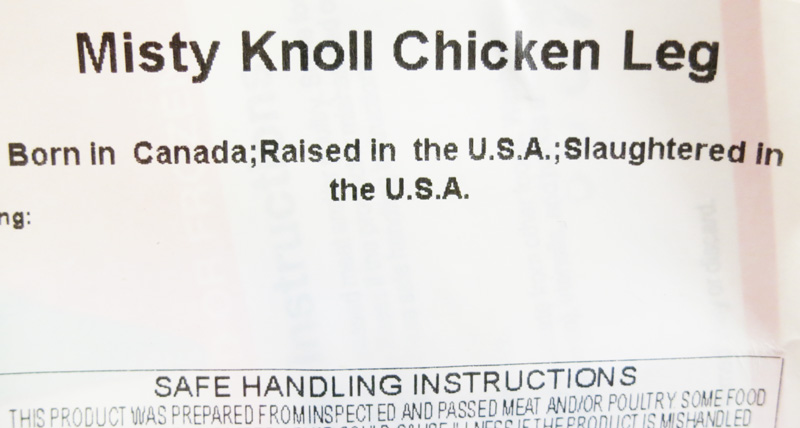
Country of Origin Labeling: What It Means for Us | City Market / Onion River Co-op
Country of origin labelling - Food Standards The Australian Government introduced a country of origin food labelling system under Australian Consumer Law on 1 July 2016. Country of origin labelling requirements for food is in the Country of Origin Food Labelling Information Standard 2016, under the Competition and Consumer Act 2010. These requirements became mandatory on 1 July 2018.

Septic Devourment - Encyclopaedia Metallum: The Metal Archives
What is the country of origin labeling for imported beef? - USDA The mandatory country of origin labeling of imported meat and poultry requires that if imported meat or meat products are intended to be sold intact to a processor, wholesaler, food service institution, grocer, or the household consumer, the country of origin labeling is conveyed to those market segments and recipients.
Post a Comment for "38 country of origin meat labels"